This post contains affiliate links. As an Amazon Associate, we earn from qualifying purchases at no additional cost to you.
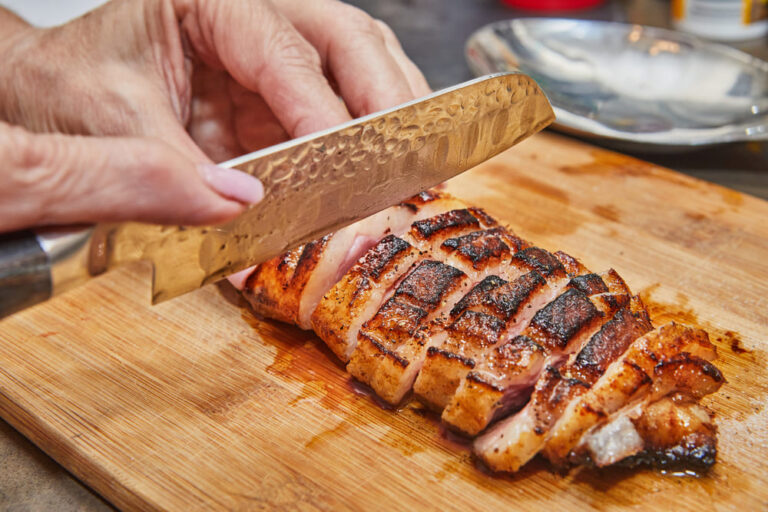
A brisket slicing knife isn’t about cutting—it’s about slicing cleanly in a single pass. The difference shows up in texture, moisture, and presentation.
We focused on what actually matters: blade length, edge retention, and how each brisket slicing knife performs in real use. Every option here has tradeoffs, and those are called out clearly so you can choose what fits your setup.
This review utilizes our TopRatedKitchen Review Standard, focusing on performance, durability, and real-world value.
The best knife for slicing brisket starts here with our top 5 picks and if it’s listed here, it met that standard.
How We Chose These Brisket Knives
- Blade length & geometry. Enables long, clean slices without tearing
- Edge retention vs. maintenance. Balances sharpness with real-world upkeep
- Sticking & slice quality. Granton vs. straight edge performance
- Value and tradeoffs. Performance relative to price and durability
Best Brisket Slicing Knives at a Glance
If you want the condensed version first, this list is the fastest way to compare the best knife for slicing brisket in this Guide.
Use it to scan each pick by category, then click the product name to jump straight to the full review and see why it made the list.
Shun Classic 12″ Brisket Knife
- Best For: Precision slicing and edge retention
- Material: VG-MAX Steel with Damascus Cladding
- Top Feature: Premium steel and sharpness longevity
- Not Ideal For: Low maintenance users or cutting near bone
Wusthof Gourmet 14″ Brisket Knife
- Best For: Slicing large, whole (packer) briskets
- Material: Non-forged German Stainless Steel
- Top Feature: Extra long blade reduces friction and sticking for thin slices
- Not Ideal For: Cooks with limited storage or small kitchens
Victorinox Swiss Army Pro Slicing Knife
- Best For: Reliable performance and easy maintenance
- Material: High carbon stainless steel
- Top Feature: The Granton edge helps reduce sticking during slicing
- Not Ideal For: Users seeking long edge retention
Dalstrong Slicing & Carving Knife
- Best For: Heavier handling with modern styling
- Material: Japanese High Carbon AUS-8 Steel
- Top Feature: Affordable professional-style “tactical” features
- Not Ideal For: Traditionalists or those seeking a lightweight feel
Cutluxe Artisan Series Brisket Knife
- Best For: Occasional use at a lower price point
- Material: High Carbon German Steel
- Top Feature: Razor-sharp, hand-honed Granton blade edge
- Not Ideal For: Home chef expecting long term, heavy use
Our 5 Best Slicing Knife Picks for Brisket
Finding the perfect brisket trimming or slicing knife is about balancing blade length, edge type, and handle comfort to ensure every cut is as effortless as the first.
This list starts with our “Best Performance” recommendation and moves through “Best Options” for large briskets, overall value, modern design and budget-friendly knives.
Shun Classic 12″ Brisket Knife
Our Rating: ★★★★★
Best For: Effortless single-pass carving and long-lasting razor sharpness
QUICK FACTS:
- Blade Length:
- Blade Material:
- Edge Type:
- Handle:
- Tang:
- Dishwasher Safe:
- Warranty:
- 12 inches
- VG-MAX Steel (Damascus clad)
- Hollow (Granton-style)
- Pakkawood
- Full Tang
- No
- Limited Lifetime
Why It Stands Out
- Friction-reducing hollow grinds create small air pockets preventing meat from sticking to the blade
- Longer slices reduce tearing and help preserve texture
- Stout, rigid geometry features a thicker 3.5mm spine that lets you “lean” into the cut
- Ergonomic D-shaped handle fits the palm naturally providing better control
Limitations to Consider
- Harder steel holds an edge longer but is more prone to chipping if used on hard surfaces
- Requires whetstone sharpening rather than standard honing
- The D-shaped handle is designed for right-handed users
- Not suitable for tasks requiring a flexible blade
Final Verdict
This is where premium steel makes a measurable difference. Slices are cleaner and more controlled, but the knife requires more care than softer steel options.
Wüsthof Gourmet 14″ Brisket Knife
Our Rating: ★★★★½
Best For: Squaring off the brisket’s edges and “shaving” the fat cap to uniform thickness. Its length allows for long, flat passes capturing more smoke flavor.
QUICK FACTS:
- Blade Length:
- Blade Material:
- Edge Type:
- Handle:
- Tang:
- Dishwasher Safe:
- Warranty:
- 14 inches
- Non-forged German Stainless
- Hollow Edge
- Polymer
- Full Tang
- No
- Limited Lifetime
Why It Stands Out
- The 14-inch blade makes it easier to slice full packer briskets in a single pass
- Reduced drag with Granton (hollow indentation) edges create small air pockets between the steel and the meat minimizing friction
- Lightweight and precision laser-stamped from a single sheet of high-carbon stainless steel reduces hand and wrist fatigue during high-volume slicing
- The triple-riveted handle, made of a high-density synthetic material, is almost indestructible and resists fading, discoloration, and warping from moisture
Limitations to Consider
- The softer steel hardness factor means it dulls faster, requiring more frequent honing to maintain a peak edge
- Lightweight and laser-stamped, this brisket knife may require more manual pressure to cut through crusty brisket bark
- This slicing knife for brisket measures 19 inches in total and is generally too long for knife blocks and kitchen drawers
- The Gourmet series brisk knife does not feature a thick junction between blade and handle. This means less protection for fingers and may feel unbalanced.
Final Verdict
The length is both an advantage and disadvantage. Once you adjust to the blade length and the grip, it becomes an attractive option for slicing large, heavy briskets cleanly in a single motion.
Victorinox Swiss Army Pro Slicing Knife
Our Rating: ★★★★½
Best For: Precision-portioning a brisket flat into uniform, pencil-thick slices. Its blade prevents the meat’s rendered collagen from sticking, ensuring clean cuts without tearing the bark.
QUICK FACTS:
- Blade Length:
- Blade Material:
- Edge Type:
- Handle:
- Tang:
- Dishwasher Safe:
- Warranty:
- 12 inches
- High-carbon stainless steel
- Granton
- Fibrox
- Partial Tang
- Yes
- Limited Lifetime
Why It Stands Out
- The 12-inch length allows for single-stroke, “pencil-thick” slices that prevent the meat from shredding or tearing.
- The Granton edge creates air pockets that stop the brisket’s sticky rendered collagen and fat from suctioning to the blade.
- The non-slip Fibrox handle provides a secure, hygienic grip even when your hands are covered in brisket grease or juices.
- The flexible stamped steel makes it easier to follow the natural curves of the meat when separating the point from the flat.
Limitations to Consider
- The softer stamped steel can require frequent honing if used in long slicing sessions to cut through the brisket bark.
- The blade’s flexibility can make it difficult to maintain a perfectly straight line when cutting through a thick, cold fat cap.
- This brisket knife lacks the premium look and feel of high-end Japanese or German knives.
- The large 12-inch profile can feel bulky and oversized if you are working with smaller, trimmed brisket flats or point sections.
Final Verdict
The Victorinox 12″ Slicer is the ultimate “workhorse” for brisket, offering professional-grade precision and a slip-resistant grip.
While it lacks the premium beauty and edge longevity of high-end brands, its reliable performance and ease of maintenance make it a good choice for high-volume slicing.
Dalstrong Slicing & Carving Knife
Our Rating: ★★★★
Best For: The home cook who expects clean, thin slices of brisket without the meat tearing or falling apart.
QUICK FACTS:
- Blade Length:
- Blade Material:
- Edge Type:
- Handle:
- Tang:
- Dishwasher Safe:
- Warranty:
- 12 inches
- Japanese High-Carbon AUS-8 Steel
- Granton
- Laminated Pakkawood
- Tang: Partial Tang
- Dishwasher Safe: No
- Lifetime
Why It Stands Out
- The partial tang design makes this knife significantly lighter than standard slicers, favoring speed and maneuverability over raw power.
- Hand-finished to a 13-15° angle, the Japanese AUS-8 steel provides a sharper out-of-the-box feel than most Western-style budget knives.
- The traditional Japanese D-shaped handle is specifically shaped to fill the palm, offering better directional control during long horizontal slices.
- The blade features a tapered design and a polished spine to help the steel glide through large cuts with less resistance.
Limitations to Consider
- Because the steel does not extend fully through the handle, it lacks the “indestructible” feel and balance of a traditional heavy-duty carving knife.
- The D-shaped handle is asymmetrical, meaning left-handed users will likely find the ergonomics uncomfortable or awkward.
- While very sharp, the thinner Japanese-style edge is more prone to chipping if it accidentally hits a bone or a hard cutting board.
- Japanese AUS-8 steel requires immediate cleaning and drying to prevent “stray” rust spots, making it less forgiving than standard stainless steel.
Final Verdict
This Dalstrong Phantom Series brisket knife is a specialized, lightweight slicer that prioritizes precision slicing over durability.
It’s a solid choice for those who prefer the nimble feel of Japanese steel, provided they are willing to buy into its stricter maintenance requirements.
Cutluxe Artisan Series Brisket Knife
Our Rating: ★★★★
Best For: Casual weekend “pitmasters” and budget conscious smokers
QUICK FACTS:
- Blade Length:
- Blade Material:
- Edge Type:
- Handle:
- Tang:
- Dishwasher Safe:
- Warranty:
- 12 inches
- High-carbon German stainless steel
- Granton
- Pakkawood
- Full tang
- No
- Lifetime
Why It Stands Out
- Unlike many competitors in this price bracket, it features a full-length tang, providing a decent sense of stability and weight.
- Forged from 1.4116 German steel, the blade is highly resistant to corrosion and easier to maintain in a humid BBQ environment.
- The hollow-ground divots effectively reduce suction, helping to prevent fatty brisket slices from tearing or sticking to the blade.
- It provides a professional “look” and basic carving functionality for home cooks who only smoke meat a few times a year.
Limitations to Consider
- While marketed as “German Steel,” the brand is less transparent about where the actual assembly occurs. Most knives at this price point are manufactured in China using imported steel, which is a significant distinction from a knife actually made in Germany.
- The steel, tempered to a softer 56+ HRC, means the edge rolls quickly requiring frequent honing during long slicing sessions.
- The chunky, squared-off handle design shifts the center of gravity toward the rear, that may cause hand fatigue for users with smaller hands.
- The factory 14-16° edge is “toothy” compared to the smooth edge of high-end brands like Shun or Wüsthof, resulting in less smooth, silky slicing.
Final Verdict
The Cutluxe Artisan Series brisket knife is a functional entry-level tool that offers the look of a pro knife without the high-end performance.
It is a capable “Budget-Friendly” choice for occasional use, but serious pitmasters will likely be frustrated by its weight distribution and frequent need for sharpening.
Brisket Slicing Knife – FAQs
What They Don’t Tell You
Some performance and durability factors are not always obvious from product listings but can have a real impact on how a slicing knife for brisket performs over time.
The “Granton Edge” Reality
In this review, we list the Granton edge (those little dimples) as a feature because it’s the industry standard for reducing friction. But here’s what the marketing photos don’t show…warm brisket is a different slice.
When you’re slicing a hot, fatty point, that rendered fat and juice can actually fill those dimples. Instead of creating an air pocket to prevent sticking, the fat creates a ‘suction cup’ effect. If you find your ‘non-stick’ blade is actually dragging, it’s not the knife, it’s the physics of hot fat.
The Fix: Keep a damp lint-free cloth nearby and wipe the blade every two or three slices to clear those divots.
The Honing Hook
You’ll see ‘requires frequent honing’ in almost every review of a high-carbon brisket knife. But here’s the part they leave out…your current honing rod is probably too short.
Standard honing rods are 9 or 10 inches long. If you try to run a 12-inch brisket blade across a 10-inch rod, you won’t have enough ‘runway’ to finish the stroke. This leads to a dangerous habit of only honing the middle 60% of the blade.
Over time, you’ll actually wear a ‘frown’ into your knife. A subtle curve arrives where the middle is thinner than the heel and tip. Once that happens, the knife won’t make full contact with the cutting board. Then you’ll find yourself ‘sawing’ through the bottom bark of your brisket.
The Fix: If you’re moving up to a 12-inch slicer, you need to budget for a 12-inch or 14-inch honing rod. A rod works best if it is at least as long as the blade it’s maintaining.
The Brisket Bark “Rust Rule”
Manufacturers love to use terms like ‘High-Carbon Stainless Steel’ because it sounds like the best of both worlds. You get the sharpness of carbon and the durability of stainless. But the reality is brisket bark is surprisingly corrosive.
The combination of salt, acidic mustard binders, and vinegar-based spritzes creates a chemical climate on your blade. If you slice a hot brisket and then leave the knife on the board while you eat dinner, those acids will go to work instantly.
By the time you get back to the kitchen to clean up, you’ll often find ‘pitting’ or small grey ‘stray’ rust spots. This happens even on ‘stainless’ blades like the Dalstrong or Cutluxe.
The Fix: Treat your brisket slicer like a cast-iron skillet. Never let it sit ‘dirty.’ Keep a dry towel; wipe the blade clean and bone-dry every single time you set it down. If you’re using a high-carbon Japanese blade like the Phantom Series, a light coating of food-grade mineral oil before putting it away is mandatory.
Our Final Thoughts
A high-quality brisket slicing knife is a specialized tool you’ll want to consider for meat preparation. The good, the bad, and the alternatives come down to cut type, safety, and meat handling.
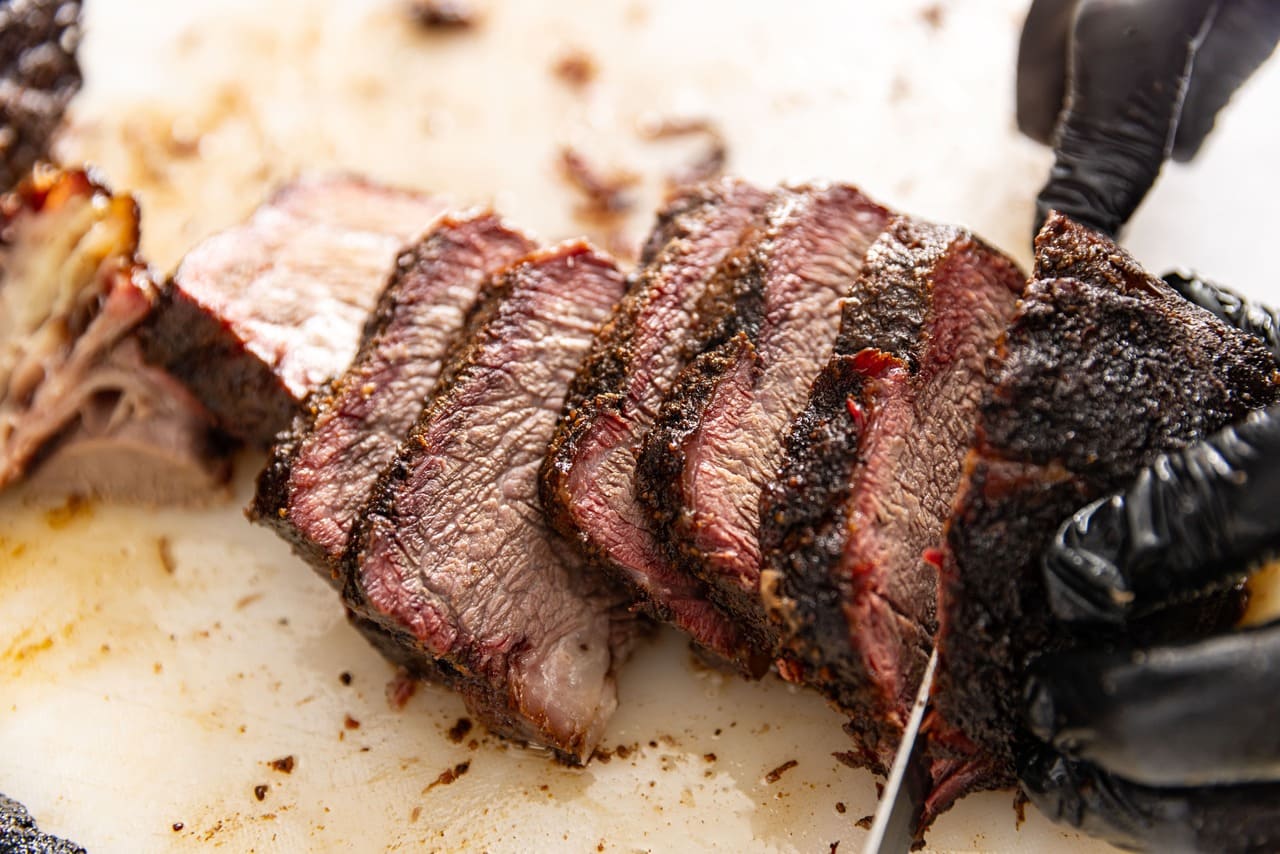
The main benefit of a traditional, long brisket knife is its ability to glide through a large cut of meat in a single, fluid pass. The long sweeping motion rather than a short, choppy sawing motion, avoids tearing the delicate bark. It preserves the meat’s moisture after a long smoke.
Knives with a Granton edge can be a good option because the hollowed divots create air pockets, which prevent the moist fat and meat from sticking to the blade with proper wiping between every few strokes.
On the downside, a dedicated brisket slicer is a large, single-purpose blade (typically 12 to 14 inches). It has a bit of a learning curve and requires a large amount of counter space.
Because these blades are long and thin, optimal performance means a flawless technique from the user. If the edge isn’t kept razor-sharp, the blade will actually drag and squeeze out juices rather than cut cleanly.