
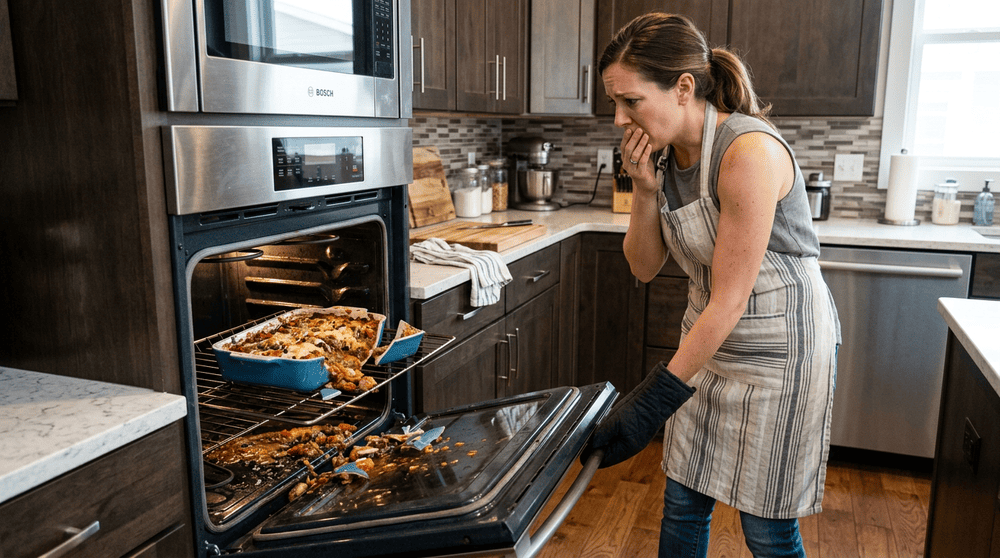
“Thermal shock” is the brutal reality of what happens when you force drastic temperature changes on your cookware and bakeware. That sizzling sound when you rinse a piping hot pan under cold water? That’s not the sound of your cookware getting clean…it’s the sound of your money going down the drain.
You didn’t buy a defective product, and you didn’t just experience a “freak accident.” You ignored basic physics, shattered or warped your expensive cookware, and instantly voided your manufacturer’s warranty.
Companies can tell exactly when user abuse causes a thermal fracture, meaning no one is sending you a free replacement.
What Causes Thermal Shock
Thermal shock happens when a material heats or cools too quickly. The sudden change causes uneven expansion inside the material. That stress can crack or even shatter cookware and bakeware.
Which Materials Are Most Vulnerable
Glass, ceramic, cast iron and even stoneware are vulnerable to thermal shock. These materials expand and contract more slowly than metals like stainless steel. A fast temperature swing does not give them time to adjust.
Before you claim your broken pan or casserole dish was “defective,” check this list. See if you actually destroyed it yourself.
The “How to Ruin Your Cookware” Checklist
If you are doing any of the following, you are actively trying to destroy your cookware and bakeware. This means effectively throwing your money away.
- Rinsing hot pans immediately – Plunging a scorching pan into cold sink water causes instant metal warping and microscopic fractures.
- Placing hot glass on wet counters – Setting a hot Pyrex dish on a damp surface or a cold granite countertop induces immediate glass shattering.
- Moving dishes straight from freezer to oven. Forcing frozen ceramic or glass bakeware directly into a hot oven creates uneven expansion that snaps the material.
- Adding cold liquids to screaming hot pans – Deglazing a dry, searingly hot pan with ice-cold water or stock creates severe thermal stress at the impact point.
- Using maximum heat on empty cookware – Cranking your stovetop to high heat without fat, oil, or food in the pan triggers rapid, uneven thermal expansion.
- Setting hot bakeware on cold stovetop burners – Placing an oven-fresh casserole dish directly onto a cold metal or glass burner creates an aggressive temperature differential.
- Using a damp oven mitt to grab hot pans – The moisture in the mitt instantly turns to steam. This transfers heat unevenly and causes you to drop and shatter the dish.
Warning Signs to Watch For
A loud cracking or popping sound during a temperature change is an immediate warning sign. Visible cracks, chips, or a spiderweb pattern in glass are also signs of damage. Stop using any piece showing these signs right away.
How to Prevent Thermal Shock
A few simple habits go a long way toward protecting cookware and bakeware from thermal shock.
- Let cookware and bakeware move closer to room temperature before adding heat or cold.
- Avoid setting a hot dish directly on a cold or wet surface.
- Add liquids gradually instead of pouring cold liquid into a very hot pan.
- Check manufacturer guidelines before moving a piece between the freezer, oven, or stovetop.
How This Affects Your Warranty
Many manufacturer warranties include language excluding damage from “misuse, neglect, or overheating”. Thermal shock cracks often fall under this fine print rather than a covered defect. A sudden crack caused by a fast temperature change looks like misuse to most manufacturers.
This is true even for high-quality cookware and bakeware from trusted brands. Following the manufacturer’s temperature guidelines protects both the product and the warranty. Check your warranty terms before assuming thermal shock damage will be covered.
Thermal Shock vs. Normal Wear
Not every crack or chip, however, is caused by thermal shock. Age, impact damage, and manufacturing defects can look similar at first glance. A sudden crack right after a fast temperature change is the clearest sign of thermal shock specifically.
Thermal shock is preventable with a few simple habits in the kitchen. Understanding how it happens is the first step to protecting your cookware and bakeware investment.